
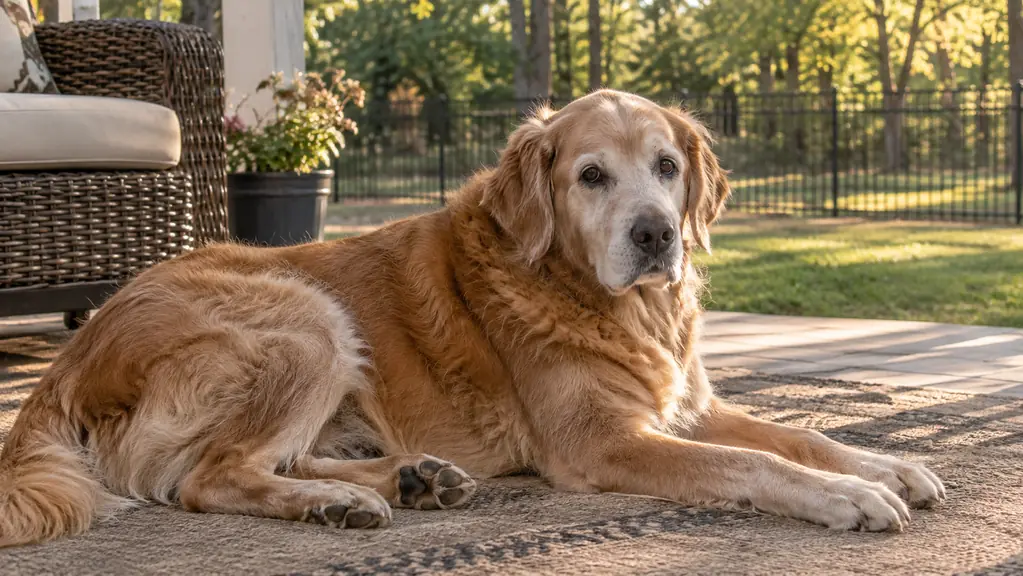
Ranger is 11 now, a black Labrador who still thinks he is a puppy until the first step out of bed reminds him otherwise. For the past year his back hips have been stiff in the morning and slower after a long nap on the den carpet. That is why I started looking at joint support that would not turn his dinner into a battle. I landed on Natural Dog Company Wild Alaskan Salmon Oil for Dogs, the 16-ounce bottle with a pump, after our vet said a fish oil topper was reasonable to try alongside the plan we already had.
I am not a vet, and I do not play one on the porch. Our vet diagnosed Ranger with mild hip arthritis when he was 9. Since then we have watched his weight, kept his walks short and steady, and avoided making him jump into the Ford F-150 when I can let him use a ramp instead. This review is about six months of daily use, what I saw, what I did not see, and who I think should talk to their own vet before buying a bottle. Natural Dog Company did not pay for this and I bought the bottle myself.
The Quick Verdict
Easy to pump over kibble, Ranger licks it clean, and his coat looks better than it did last winter. The changes in his hips were gradual and modest, not a turnaround. If your vet approves fish oil and you want a simple liquid topper, this is a solid one.
Amazon Check Today's Price →A bottle that earns its spot beside the food bin
Natural Dog Company Wild Alaskan Salmon Oil is the topper I have kept in Ranger's routine for six months. It is a 16-ounce bottle with a pump, and it goes on his evening meal without a fight.
Amazon Check Today's Price on Amazon →How I've Used It
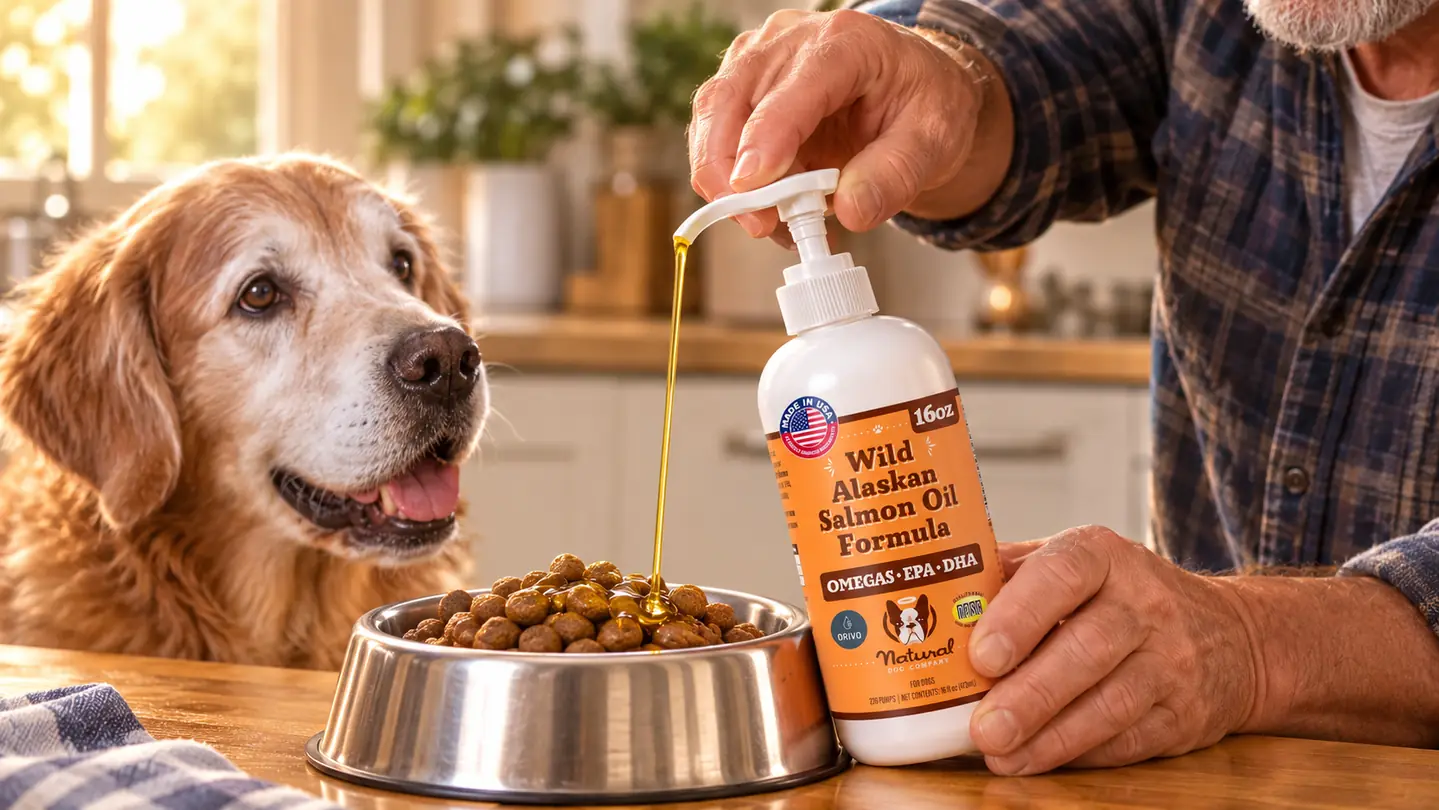
We started in March, on a Tuesday if I remember right, because Linda had put a sticky note on the calendar that said ask vet about fish oil. I gave Ranger the amount our vet suggested, worked into his evening kibble, and watched him like a hawk. He sniffed it, looked at me as if I had lost my mind, and then cleaned the bowl. That has been the routine since. The amount goes into his food, same time each evening, and the pump makes it easy to keep consistent.
Week one I pumped it over the sink instead of over the bowl, because I did not know yet how hard the pump would push. It is a steady pump, not a squirt, and once I knew how many pumps our vet's amount worked out to, I stopped measuring twice. The bottle is 16 ounces and the listing gives serving guidance by weight, so I wrote Ranger's number on a strip of masking tape on the shelf and left it there. At 82 pounds he is on the high end of that chart, which is worth knowing if you have a smaller dog. You will get more meals out of the same bottle.
The bottle sits on a shelf beside his food bin. The pump is the reason I kept using it. I have tried powders that leave a chalky ring in the bowl and chews that Ranger will eat one day and ignore the next. Oil is harder to fake. It goes on the food, it smells like fish, and he either eats it or he does not. Ranger eats it.
I checked with our vet before the first bottle and again at his next regular visit. We did not change his other joint care at the same time. That was on purpose. If you change three things in one week, you learn nothing. I wanted to know what the salmon oil did on its own, and I wanted our vet to have a clear picture if something went sideways.
What the Omega-3s Are Actually Doing
The label lists EPA, DHA, omega-3 and omega-6, and the product is described as support for joints, skin, coat, heart, immune and digestive health. I am not going to pretend I understand every pathway. What I understand is that fish oil is not a pain pill. It does not work like the medication our vet prescribed. It is a nutritional layer, and it takes time.
EPA and DHA are the two names that come up most when you read about fish oil for dogs. The listing calls this a wild Alaskan salmon oil, and the features mention salmon and pollock oil. I care less about the marketing language and more about whether the oil is easy to give every day. A supplement you skip is not doing much.
The other thing I noticed is that this is a food topper, not a treat. That matters for a dog like Ranger, who is food motivated but also 82 pounds and prone to putting on weight if I am loose with extras. I cut back a little on his kibble when I started the oil, with our vet's okay, so I was not adding a pile of calories on top of his regular meals.
What Changed Over Six Months
The first change was not a jump. It was a pause. Before the oil, Ranger would stand at the top of the two back porch steps and think about it. After about six weeks, he was still careful, but he stopped stopping. He would put a paw down, take the step, and keep moving. That is a small thing unless you have watched a big dog hesitate every single day.
Mornings were the second place I looked. He is 11 and he sleeps hard. He still takes a minute to unfold. But he seemed less stiff when he first stood up, and he was more willing to follow me to the kitchen for his breakfast. I would not call it a turnaround. I would call it a little less creaking.
The clearest test came in July, when the humidity out here sits on you like a wet blanket. Summer has always been hard on him. Before the oil, a hot stretch meant he would make it to the end of the driveway and turn around on his own. Last July he did the full twenty-minute loop, slower than the old days but the full loop, and he was the one who wanted to keep going when I was ready to head back. I will not hang all of that on a bottle of fish oil. The weight we took off him helped. The shorter walks helped. But it was a better summer than the one before it.
His coat is the change other people notice. Linda said he looked shinier in the shoulders, and our daughter commented on it at Easter. I do not know if that is the omega-3s or the fact that I brushed him more often because the oil made his food smell interesting to him. Either way, it was a nice side effect.
What did not change: he still has arthritis. He still has days when the weather gets in his hips. He still cannot do the long walks we used to take down to the end of the neighborhood loop without a rest. The oil is one part of a plan, not the whole plan. Anyone who tells you a bottle will replace their vet is selling something else.
The first change was not a jump. It was that Ranger stopped hesitating at the two porch steps before his evening walk.
The Tradeoffs I Noticed
The pump is convenient until it is not. Oil gets on the neck of the bottle, and if you are not careful the bottle gets slick enough that you need two hands. I keep a paper towel under it now. That is a small annoyance, but it is real. If you are the kind of person who wants zero mess, a chew is easier.
The smell is fish oil. Ranger loves it. Linda does not. I store the bottle in the pantry and wipe the rim after each use. The bowl gets a little oily, so I rinse it before it goes in the dishwasher. None of this is a deal breaker for us, but it is part of the routine.
One thing I did not expect: the oil separates when the bottle sits. I shake it before I pump now, every time, the way you would shake a jar of peanut butter. Nobody told me that. I figured it out when the last inch of a bottle poured thinner than the first inch did. It is not a complaint, just a step worth knowing about. Keep it somewhere cool and out of the sun too. Our pantry shelf is fine. The windowsill over the sink is not.
The biggest tradeoff is time. You will not know if it helps after a week. I started looking for changes around the six-week mark and I was still second-guessing myself at two months. If you need a fast answer, this is the wrong product for you. If you can keep a simple daily habit and let your vet track the big picture, it fits.

How It Fits With the Rest of Ranger's Care
Ranger is on a joint plan our vet set up. We watch his weight, we walk the loop at his pace, and we use a ramp for the truck when his hips are acting up. The salmon oil did not replace any of that. It went into the same slot as his evening meal, which is the only reason I think it stuck.
The ramp is a good picture of how I think about all this. When Ranger was 9 and started hesitating at the tailgate of the F-150, I bought a folding ramp and taught him to use it in a weekend with pieces of hot dog. That was a fix for one specific problem. The oil is a different kind of thing. It is not a fix. It is a small daily input that either helps over time or it does not, and the only honest way to find out is to hold the rest of the routine steady and watch. I keep a note on the calendar at the start of each month. Nothing fancy, just a word or two about how he got up that morning. Six months of those notes told me more than any single good day or bad day did.
I like that it is a liquid. Ranger is not a dog who will take a pill hidden in cheese and forget about it. He will find the pill. He will eat the cheese. He will spit the pill on the floor and look at me. The oil does not give him that option.
If your dog is on medication or has a health condition, talk to your vet before adding fish oil. That is not a disclaimer I am tacking on. It is the first thing I did, and it is the first thing I would tell a friend.
One more thing I pay attention to is the bowl. I use a stainless steel bowl because it rinses clean, and I stir the oil in rather than pouring it on top and letting Ranger wear half of it on his ears. That is not a product flaw. It is just how a big dog eats. A little care makes the routine easier.
What I Liked
- Easy to pump over kibble, no pill to hide
- Ranger eats it without fuss every evening
- His coat looked better after a few months
- One 16-ounce bottle with a pump is simple to store
- Fits alongside the joint plan our vet already had
Where It Falls Short
- The pump can get slick and messy if you rush
- The fish oil smell is strong, especially to Linda
- Results were gradual and modest, not dramatic
- Requires a daily habit and a vet conversation first
Who This Is For
This is for the owner of a large older dog who is already working with a vet and wants a simple daily topper. If your dog is stiff in the hips, slow to rise, or just not moving the way he did at 6, this is the kind of support that fits alongside a broader plan. It is also for the person who has tried chews and powders and wants something they can pump over food without a fight.
I think Natural Dog Company Wild Alaskan Salmon Oil makes the most sense for a dog like Ranger, a big Labrador type who eats his meals with enthusiasm and does not need another pill. The 16-ounce bottle with a pump is easy to keep by the food bin. If your dog is smaller, you will get more servings out of a bottle, but the routine is the same.
Who Should Skip It
Skip it if your vet has told you to avoid fish oil, rich fats, or salmon because of a health issue. Skip it if your dog has a sensitive stomach and you are not willing to introduce it slowly and watch for changes. And skip it if you want a fast fix. This is a daily habit, not a rescue remedy.
Skip it if you are not going to use it consistently. A bottle that sits in the pantry does nothing. I am not saying you have to be perfect. I am saying that six months of daily use is what gave me anything to report. If you cannot commit to that, save your money and talk to your vet about other options.
Start with your vet. Then start with Ranger's routine.
If your older dog is slowing down and your vet says fish oil is safe to try, Natural Dog Company Wild Alaskan Salmon Oil is the one I have kept in the rotation. One bottle, one pump, one meal at a time.
Amazon Check Today's Price on Amazon →