
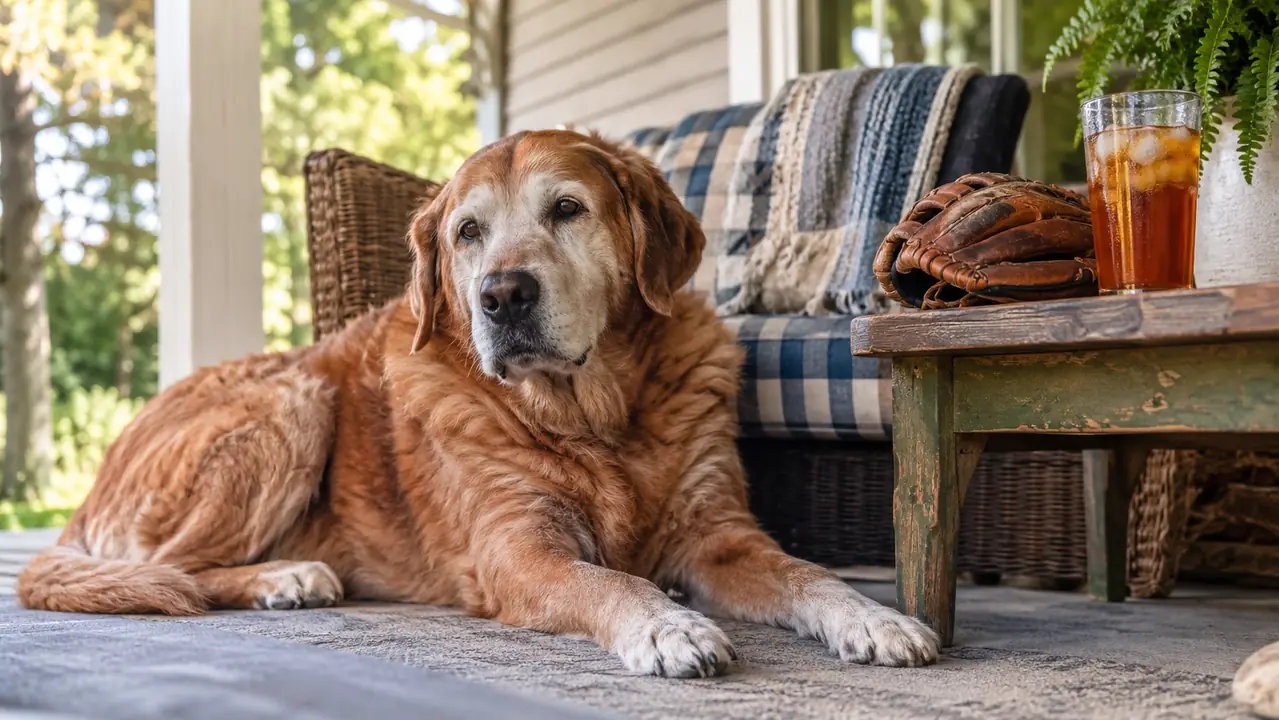
Ranger is 11 years old, about 82 pounds, and still meets me at the door when I come in from the porch. The back steps are where he thinks about it. He was diagnosed with mild hip arthritis at 9, and since then I have looked at more joint chews than I care to admit. The two I keep coming back to are Zesty Paws Mussel Mobility Bites and the plain glucosamine chews you see in every farm supply aisle. The short answer is this: Zesty Paws gives you mussel plus glucosamine, chondroitin, and omega-3s in one soft chew, and plain glucosamine gives you a simpler, usually cheaper routine. Which one fits your dog depends on what you are trying to add.
I am not a vet. I am a retired baseball coach who has learned to watch a dog's gait the way I used to watch an infielder's first step. Ranger is stiff in the back hips, slow to rise after a nap, and slower on our 20 minute loop than he was two years ago. Our vet diagnosed the arthritis and told me to keep his weight down, keep him moving, and talk to her before adding anything. That is the same advice I would give you. The comparison below is about ingredients, form, and daily fit, not a promise that either chew will turn your dog back into a puppy.
| Zesty Paws Mussel Bites | Plain Glucosamine Chews | |
|---|---|---|
| What is in it | New Zealand green-lipped mussel, natural glucosamine, chondroitin, and omega-3 fatty acids | Glucosamine, sometimes chondroitin, with no mussel |
| Sourcing note | Mussels sourced from New Zealand and cold processed, according to the label | Sourcing varies by brand and is often not stated |
| Form | Soft chew | Soft chew or tablet, depending on the brand |
| Flavor | Chicken and mussel | Varies by brand |
| Count and weight | 90 count bag, 7.9 ounces | Varies by brand |
| Flavor options | One flavor listed, chicken and mussel | Often sold in more flavors and forms |
| Simplicity | More ingredients to review with your vet | One familiar ingredient to track |
| Cost per bag | Usually more than a basic glucosamine chew | Usually the lower-cost option |
| Best for | Owners who want mussel plus joint support basics in one chew | Dogs already doing well on plain glucosamine |
Where Zesty Paws Mussel Bites Wins
The first thing Zesty Paws has going for it is the combination. The bag is built around New Zealand green-lipped mussel, and the title also lists natural glucosamine, chondroitin, and omega-3 fatty acids. A plain glucosamine chew gives you glucosamine, sometimes chondroitin, and stops there. If your goal is to cover the joint support basics in one soft chew, Zesty Paws does more in one bite. The mussels are cold processed and sourced from New Zealand, according to the label. I like knowing that.
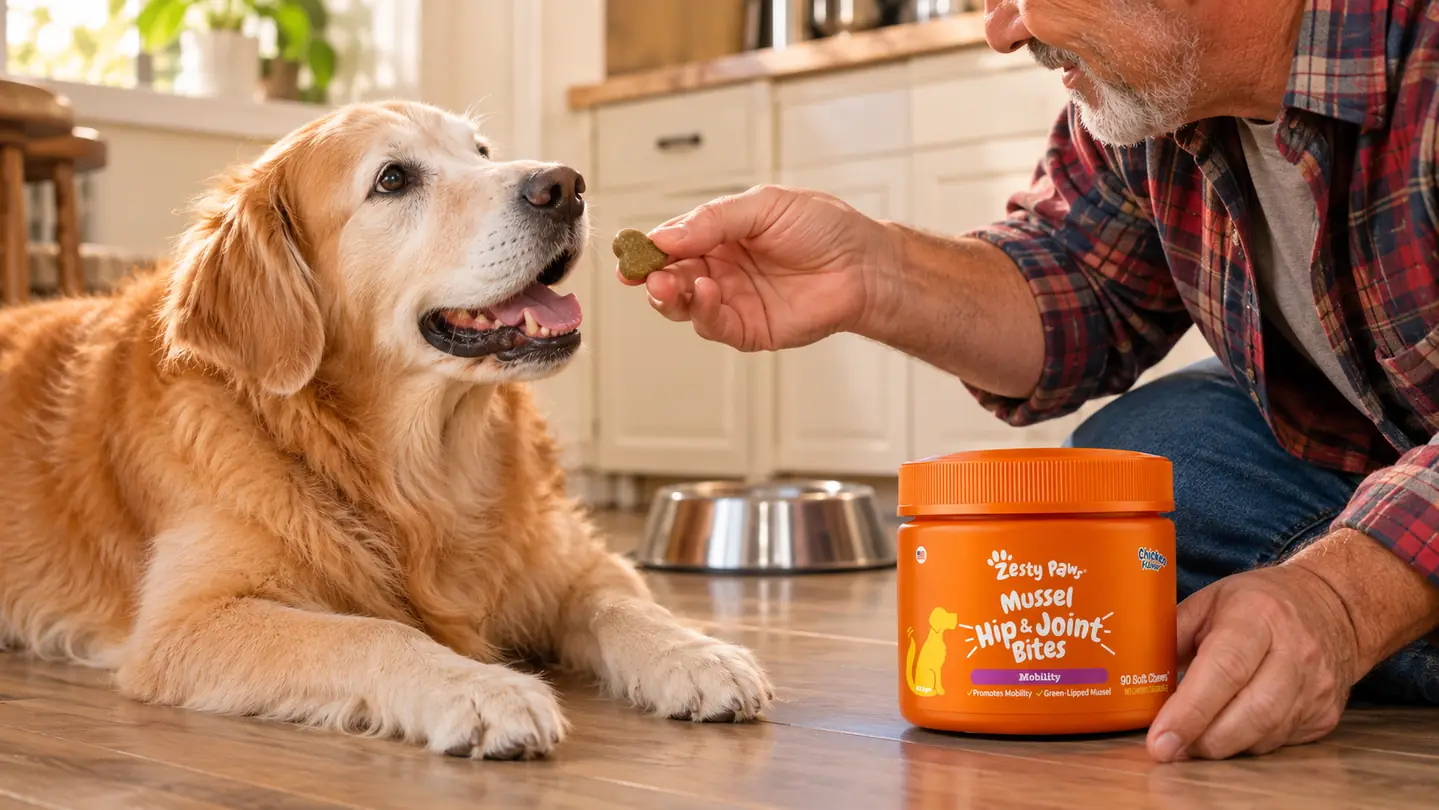
The second win is form. These are soft chews with a chicken and mussel flavor, and the bag is 90 count at 7.9 ounces. For a dog like Ranger, that matters. A tablet can become a negotiation. A soft chew can go on top of kibble or straight from my hand. I also like that the label lists antioxidant, muscle health, and nutritional support, along with hip and joint support. That is more than a single-ingredient chew can say. It is not a guarantee. It is a broader label.
I measured the difference one way. The two concrete steps off the back porch are about seven inches deep each. In April, Ranger would stop at the top, look down, and take both in one hop. By June he was taking them one at a time, front paws first, then a pause. That is the kind of small change a coach notices before he notices anything else, and it is why I started paying attention to what went into the bowl.
Where Plain Glucosamine Chews Wins
Plain glucosamine wins on cost. I have not met a basic glucosamine chew that did not beat a mussel-based chew on the shelf. If money is tight, or if you are not sure your dog will take a mussel chew, starting with the plain version is the sensible move. You can always add later. A cheaper bag also lets you test whether your dog will eat a soft chew at all before you commit to a 90 count bag.
Plain glucosamine also wins on simplicity. One ingredient is easier to think about than four. If your dog is already doing well on a basic glucosamine chew, switching to a mussel product adds a variable. You will not know what helped and what did not. Our vet's rule for Ranger has been to change one thing at a time and give it several weeks. Plain glucosamine fits that rule. So does Zesty Paws, if mussel is the one new thing you are adding.
If you want mussel plus glucosamine in one soft chew, start here
Zesty Paws Mussel Mobility Bites combine New Zealand green-lipped mussel with natural glucosamine, chondroitin, and omega-3s. Ask your vet if mussel is right for your dog, then look at the current Amazon listing.
Amazon See Zesty Paws Mussel Bites on Amazon →What Is Actually in the Bag
The Zesty Paws bag I looked at is a 90 count soft chew, chicken and mussel flavor, 7.9 ounces. The title lists New Zealand green-lipped mussel, natural glucosamine, chondroitin, and omega-3 fatty acids. The listing bullets call it a limited ingredient chew and say the mussels are cold processed. The label also lists antioxidant, joint health, muscle health, and nutritional support, with hip and joint support as the specific use. Chamomile shows up in the active ingredients list. I am not going to tell you what each ingredient will do for your dog. That is a conversation for your vet. I can tell you what is on the label, and I can tell you Ranger took it without a fight.
A plain glucosamine chew is a different animal. Most are built around glucosamine, often with chondroitin, and many come as soft chews or tablets. The ones I have used did not have mussel. That is the whole point of the comparison. If you want mussel in the routine, you need a mussel product. If you want the simplest joint chew you can find, plain glucosamine is that. Neither one is a substitute for your vet's advice, especially if your dog is on other medication or has other health issues.
The other difference is the count. A 90 count bag is a commitment. Plain glucosamine chews come in different counts, and some brands sell smaller bags. If you are testing, smaller is easier. If you already know your dog will eat a soft chew, the 90 count is convenient. I keep the bag in the pantry next to the treats, and I use the same hand every morning. That is a coach's habit. Same time, same place, same way. It makes it easier to tell whether anything is changing.
Before any of this, I tried a glucosamine tablet. I crushed one into Ranger's kibble the first morning and he ate around it the way a man picks croutons out of a salad, leaving the grit in a ring around the bowl. The second morning he walked away from the bowl entirely and looked at me like I had insulted him. That was the end of tablets in this house, and it is the reason form moved up my list of things that matter.
What I Noticed With Ranger
I started Ranger on the Zesty Paws chew in late spring. He gets it before breakfast, and I watch him get up from his bed in the den. After about three weeks, he seemed to rise a little easier. He was not charging the porch steps. He was just less hesitant. That could be the chew, the warmer weather, the shorter walk, or all three. I cannot separate those things, and I am not going to pretend I can. What I can say is that he ate it, he kept a normal appetite, and his stool stayed normal. Those are the first things I check.
The bigger change was routine. Ranger now gets a chew at the same time every morning. That sounds small. For an older dog, small routines are how you notice changes. If he starts skipping it or turning his head, I will know. If he gets looser or stiffer, I will know. A 90 count bag lasts long enough to give it a fair run, which is another point in its favor. I do not like judging a supplement on a week.
One Saturday in June I timed the loop with the kitchen clock, the way I used to time sprints. Twenty-four minutes, against the twenty-seven it had been running. A single walk proves nothing, and I said so to Linda when she asked. But we went out Sunday and Monday and got the same number, and three in a row starts to look like a pattern. A pattern is all I ever asked for.
After about three weeks, he seemed to rise a little easier. He still hesitated at the truck, but the morning stiffness looked less sharp.

The Picky Eater Question
Chicken and mussel is a good flavor for a lot of dogs. It is not a guarantee. Ranger is food motivated, so he was easy. If your dog is the kind that sniffs a new chew and walks away, plain glucosamine might be the safer first step, because you can find it in more flavors and forms. I would not buy a 90 count bag for a dog that has never taken a soft chew. Start with one bag, watch the first few days, and keep the receipt. That is not fancy advice. It is just how I would do it.
There is also the shellfish question. Green-lipped mussel is shellfish. If your dog has had a reaction to shellfish or has a known allergy, ask your vet before you try a mussel product. That is not a reason to avoid it for every dog. It is a reason to make one phone call. I called our vet before I opened the bag. She knew Ranger's history, and she knew what else he was taking. That is the kind of advice a label cannot give you.
The Cost Conversation
Money matters. I am on a fixed income, and I know a lot of you are too. A mussel chew usually costs more than a plain glucosamine chew. That does not make it a bad buy. It makes it a choice. If the extra ingredients are the reason you are buying, pay for them. If you just need a basic joint chew and your dog is doing fine, save the difference. I would rather see a dog on a plain glucosamine chew every day than on a premium chew that runs out in two weeks because the budget got tight.
I do the arithmetic on the back of an envelope, the way I did with the team budget. A 90 count bag at one chew a day is roughly three months of routine. A smaller bag of plain glucosamine might last six weeks. Work out the cost per day before you decide, not the cost per bag, because the per-day number is the one that shows up every morning whether you planned for it or not.
There is also the question of what you are already feeding. If your dog is on a complete food that already has glucosamine and chondroitin, adding another joint chew is a decision to make with your vet. I am not going to tell you to stack supplements. I am telling you to read the labels and make one change at a time. That is the advice I got, and it has kept Ranger's routine simple.
Who Should Buy Which
Buy Zesty Paws Mussel Bites if your dog is slowing down on the steps or after a nap, and you and your vet want to try a soft chew that combines New Zealand green-lipped mussel with glucosamine, chondroitin, and omega-3s. It is also a reasonable fit if your dog is food motivated and will take a chicken and mussel chew. The 90 count bag gives you enough time to watch for changes without running back to the store every two weeks. Just ask your vet first, especially if your dog has a shellfish allergy or is on other medication.
Buy plain glucosamine chews if your dog is already doing well on them, if you want the simplest label you can find, or if the budget needs to stay tight. They are also the better first step for a dog that turns his nose up at a new flavor. If your vet says your dog is stable and you do not need to add mussel, do not add it just because it is new. Good care is often boring. Same food, same walk, same chew, same time.
If your vet says mussel is worth a try, here is the bag I used with Ranger
A 90 count soft chew with New Zealand green-lipped mussel, natural glucosamine, chondroitin, and omega-3s. Read the label, make one change at a time, and watch your dog for a few weeks.
Amazon See Zesty Paws Mussel Bites on Amazon →