
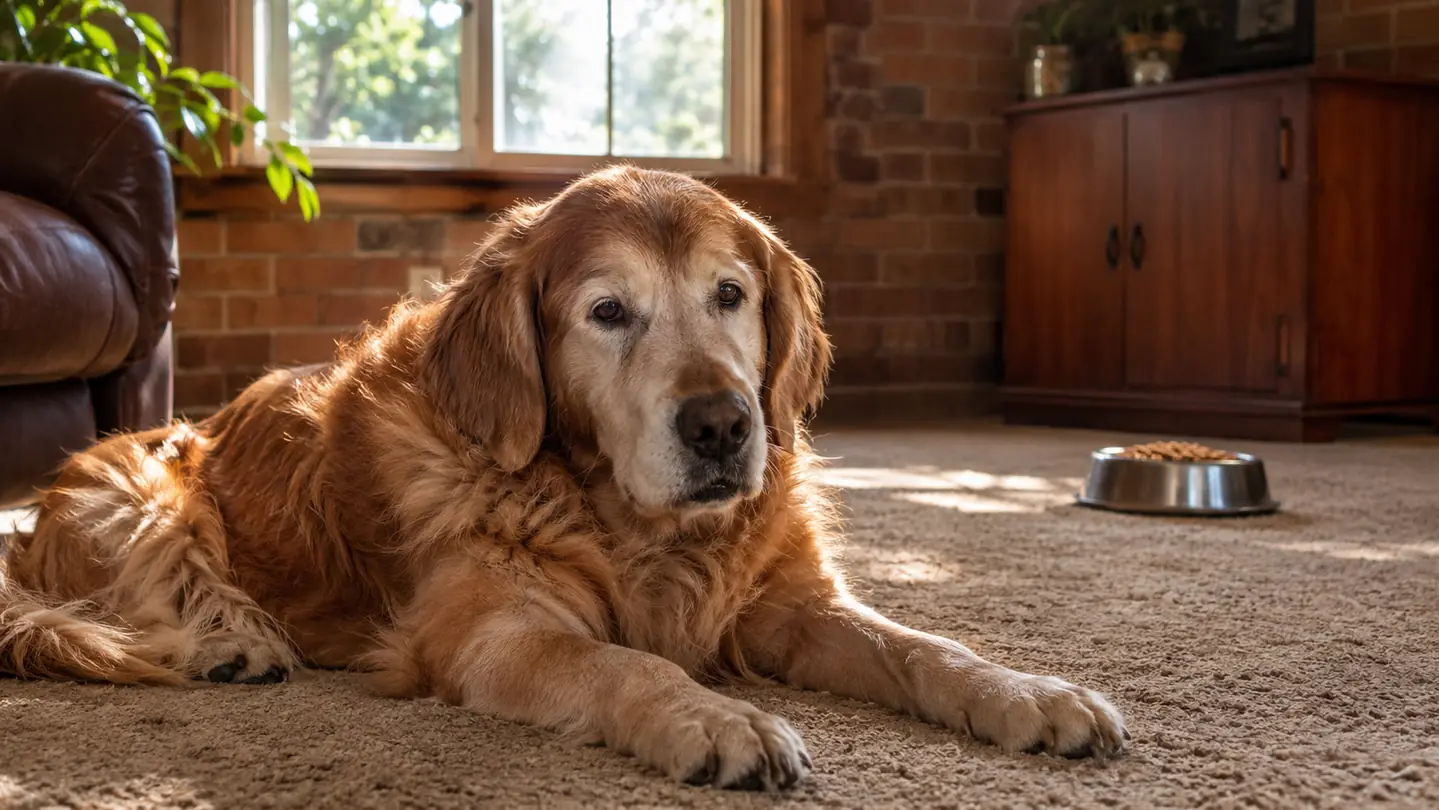
Ranger is eleven now. He is a black Labrador, about eighty-two pounds, and he does not come off the den carpet the way he used to. Our vet found mild hip arthritis when he was nine, and in the two years since I have tried a few things that did not amount to much: a chew he turned his nose up at, a powder he could smell from across the kitchen, and a pill I had to hide in peanut butter twice a day. What finally stuck was simpler than all of it. A pump bottle of salmon oil, a couple of pumps on his kibble, once a day, every day.
That bottle is Natural Dog Company Wild Alaskan Salmon Oil, sixteen ounces, and it has been sitting on the shelf next to Ranger's food bin long enough that I no longer have to think about it. I am not going to tell you it turned my old dog into a puppy, because it did not. What I will tell you is that adding salmon oil to a senior dog's food is easy to do wrong and easy to quit on before it has a chance to do anything at all. This is the routine I use, step by step, written the way I used to write out a practice plan for the infield.
The Bottle That Ended the Peanut Butter Routine
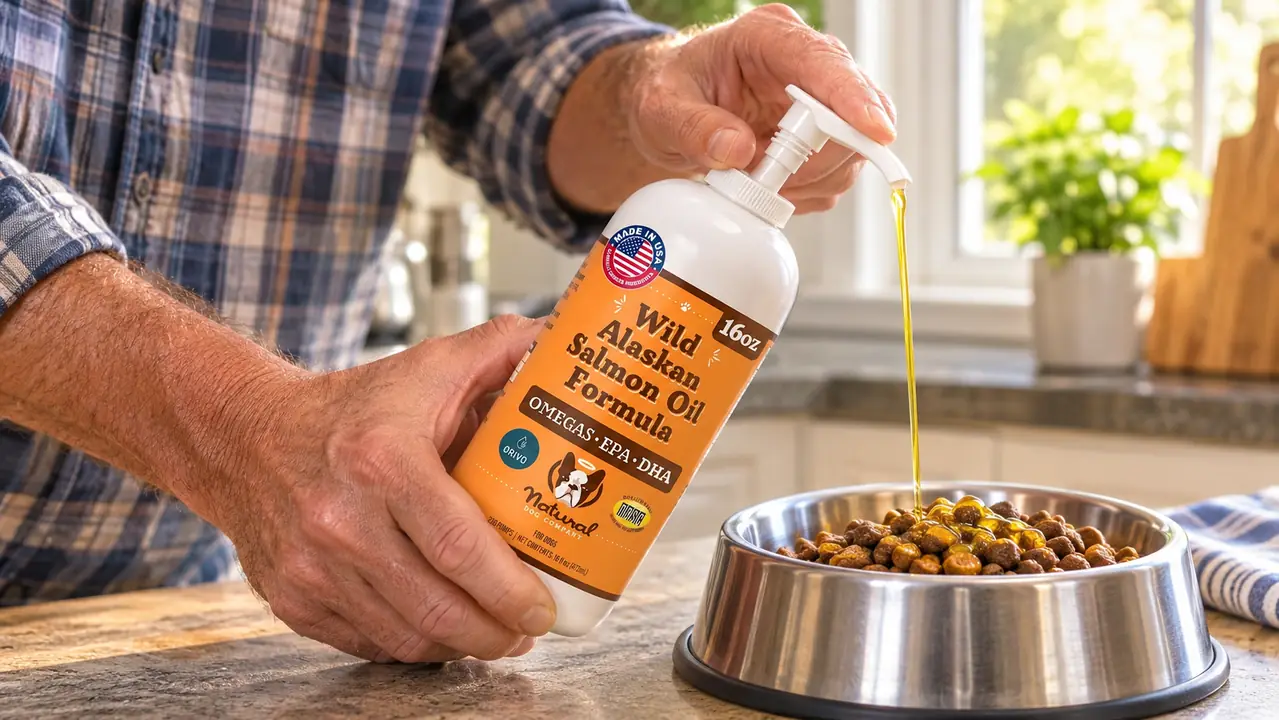
Natural Dog Company Wild Alaskan Salmon Oil comes in a sixteen ounce bottle with a pump in the cap. No pill to hide, no powder to sniff out, no twice-a-day negotiation at the kitchen counter. One press over the morning kibble and you are done.
Amazon Check Today's Price on Amazon →The Five Steps, In Order
Step 1: Call Your Vet Before the First Drop
Start with a phone call, not a bottle. When I decided to try Ranger on fish oil, the first thing I did was bring it up at his next checkup. I wanted two answers. First, does this make sense for a dog with mild hip arthritis. Second, does it bump into anything else he is already taking. Ranger was on a joint supplement by then, and I did not want to stack two things on an old dog without somebody smarter than me signing off on it.
The answer was short. Our vet said omega-3s are worth a try in an older dog with stiff hips, that it takes time to see anything, and that I should keep an eye on his stomach for the first week or so. She also asked about his history, because a dog with a sensitive gut or a history of pancreas trouble is a different conversation entirely. That is the part I could not have worked out on my own, and it is the part most people skip on the way home from the pet store.
If your dog is on a prescription medication, is scheduled for surgery, or has ever had a bad reaction to fish, that call matters more, not less. I am a retired baseball coach and a former history teacher. I can tell you what worked in my house on my dog. I cannot tell you what is right for yours, and neither can a label on a bottle. A four minute phone call settles it.
Step 2: Measure by Weight, Not by Eye
Here is where people get loose with it. A pump is not a measuring spoon, and a dog is not a recipe you can eyeball. The number our vet gave me was based on Ranger's weight, eighty-two pounds, and it came out to a specific number of pumps. I wrote that number on a sticky note and stuck the note to the shelf beside the bottle. Two decades of coaching taught me one reliable thing: a plan nobody can remember is not a plan.
The bottle makes this easier than the powders I tried. It is sixteen ounces with a pump built into the cap, about eight inches tall and narrow enough to stand on the shelf next to the food bin without tipping every time I reach past it. One full press, then a second if the note says two. I count them out loud, which Linda finds funny and which keeps me from losing track halfway through.
Do not decide that if two pumps are good, four must be better. That is not how this works, and an old dog with a loose stomach will make the point on your kitchen floor at two in the morning. If you are unsure about the amount for your dog's weight, call the clinic and ask. It takes four minutes and it saves you a week of guessing.
Step 3: Put It on a Meal He'll Actually Finish
Ranger is a Lab, which means he has never met a meal he did not finish, but he is eleven and his appetite is not what it was at four. The oil goes on top of the kibble, not under it, and then I stir it through with a fork so it does not sit in one wet spot at the bottom of the bowl. Two pumps, thirty seconds of stirring, and the bowl goes down. I use the Natural Dog Company bottle for this because the pump gives me the same amount every single morning, and after a couple of years the whole thing is muscle memory.
If your dog is a picky one, warm the food a little first. Not hot, just warm enough that it smells like something worth getting up for. A splash of warm water over the kibble and a good stir does more for a hesitant eater than any trick I know. I picked that up from a hunting buddy with a spaniel who would not eat in the August heat, and it has never once failed me.
Watch the bowl, though. If your dog walks away and leaves half of it, either the amount is too much or the food is not sitting right, and either way it belongs in your notes. A supplement only helps if it gets into the dog, and it only gets into the dog if the dog cleans the bowl. Nobody ever tells you that part.
Step 4: Keep the Bottle Fresh and the Routine Boring
The thing that kills a supplement routine is not the dog. It is the person. We all start in January with a plan, and by March the bottle is behind the coffee canisters and nobody remembers the last time it came out. So I made ours boring on purpose. The bottle lives in one spot on one shelf. The oil goes on the morning meal, because that is the meal I am always home for. Same shelf, same bowl, same time, no decisions to make.
Keep the pump clean. I wipe the nozzle with a paper towel after the morning feed so it does not go tacky around the cap, and I follow the storage line on the label rather than my own instincts. That is five seconds of work. It is also the difference between a bottle that stays easy to use for weeks and one that gets gummed up by the second week and starts living in the back of a cabinet.
At two pumps a day, a sixteen ounce bottle lasts a good while, which matters when you are deciding whether to keep buying something. I check the level every Sunday morning so I am never the man who runs out on a Tuesday and skips four days waiting on a delivery. That kind of gap is how good routines die, and I have buried a few of them myself.
Step 5: Give It Eight to Twelve Weeks and Write Things Down
You will not see anything in a week. I want to be plain about that, because I have watched people quit on things that were quietly working and never find out. Our vet's guidance was to give it eight to twelve weeks before deciding anything at all. That is a long stretch in dog years and a short one in the life of a joint, and it is the reason most people never get an answer.
So write it down. I keep a small notebook in the kitchen drawer, and once a week I put down one line: how Ranger got up that morning, whether he hesitated at the two concrete steps off the back porch, and how the twenty minute loop around the neighborhood went. That takes me about forty seconds a week. It is also the only reason I can tell you what changed and roughly when it changed.
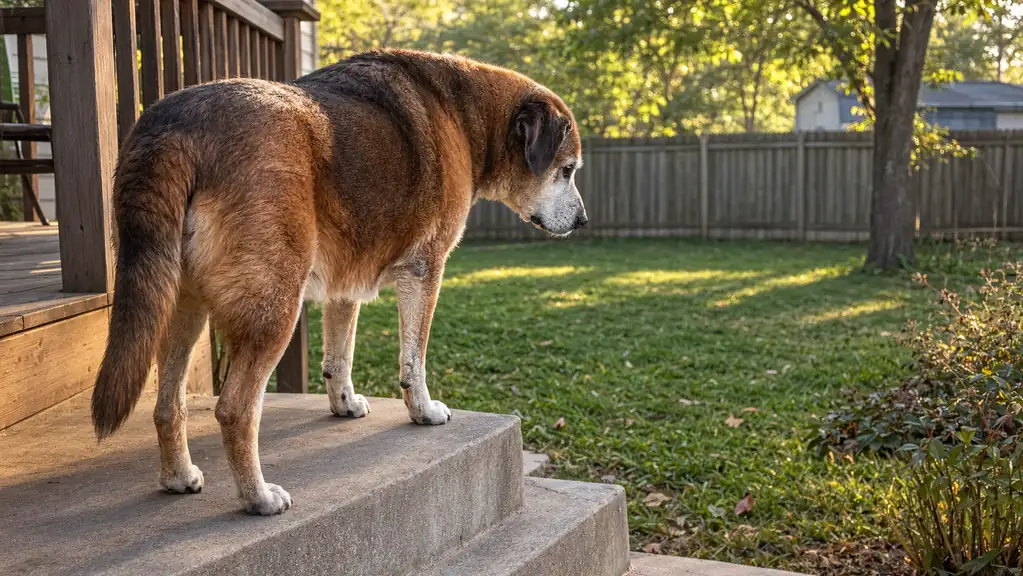
What I noticed around week nine was not dramatic, and I would not trust anybody who told me theirs was. The pause got shorter. Ranger used to stand at the top of those steps, look down, think it over, and then go. Now he mostly just goes. He is still eleven. He is still stiff when he gets up from a long nap on the den carpet. But the thinking-about-it part got smaller, and around here that counted for something.
What Else Helps
Oil is one piece of this, not the whole thing. The two changes that helped Ranger most alongside the salmon oil were the ones that cost nothing at all: getting about four pounds off him, and putting a mat at the bottom of the porch steps so his feet stopped sliding out from under him on the way down to the yard. The vinyl plank in the kitchen and hallway was the worst of it, so we laid a runner there too.
The weight came off slowly, mostly by cutting his kibble back a little and keeping the walk at twenty minutes even on the days he wanted to turn around early. Every extra pound on an eighty-two pound Lab with bad hips is a pound he carries up and down those steps four times a day. Our vet was blunt about that and she was right, which is usually how it goes.
We also got a ramp for the truck. The Ford sits up high, and Ranger had started doing this thing where he would put his front paws on the tailgate and then look back at me like I was supposed to solve it for him. He is not a young dog anymore. The ramp lets him keep riding along to the hardware store on Saturday mornings, and as far as I am concerned that is the whole point of having a dog in the first place.
And keep the vet in the loop. We go in twice a year now instead of once, and I bring the notebook with me. A dog cannot tell you where it hurts or whether last month was better than this one. Forty seconds a week of writing it down is the closest thing to an answer you are going to get.
Around week nine the pause got shorter. Ranger used to stand at the top of those steps, look down, think it over, and then go. Now he mostly just goes.
If Your Dog Is Standing at the Top of the Steps, Thinking It Over
That pause is the thing I watched for, and it is the thing I would tell you to watch too. Natural Dog Company Wild Alaskan Salmon Oil is a sixteen ounce bottle with a pump top, and it goes onto the morning kibble in about thirty seconds. Ask your vet about the amount for your dog's weight, then give it eight to twelve weeks before you judge it.
Amazon Check Today's Price on Amazon →