

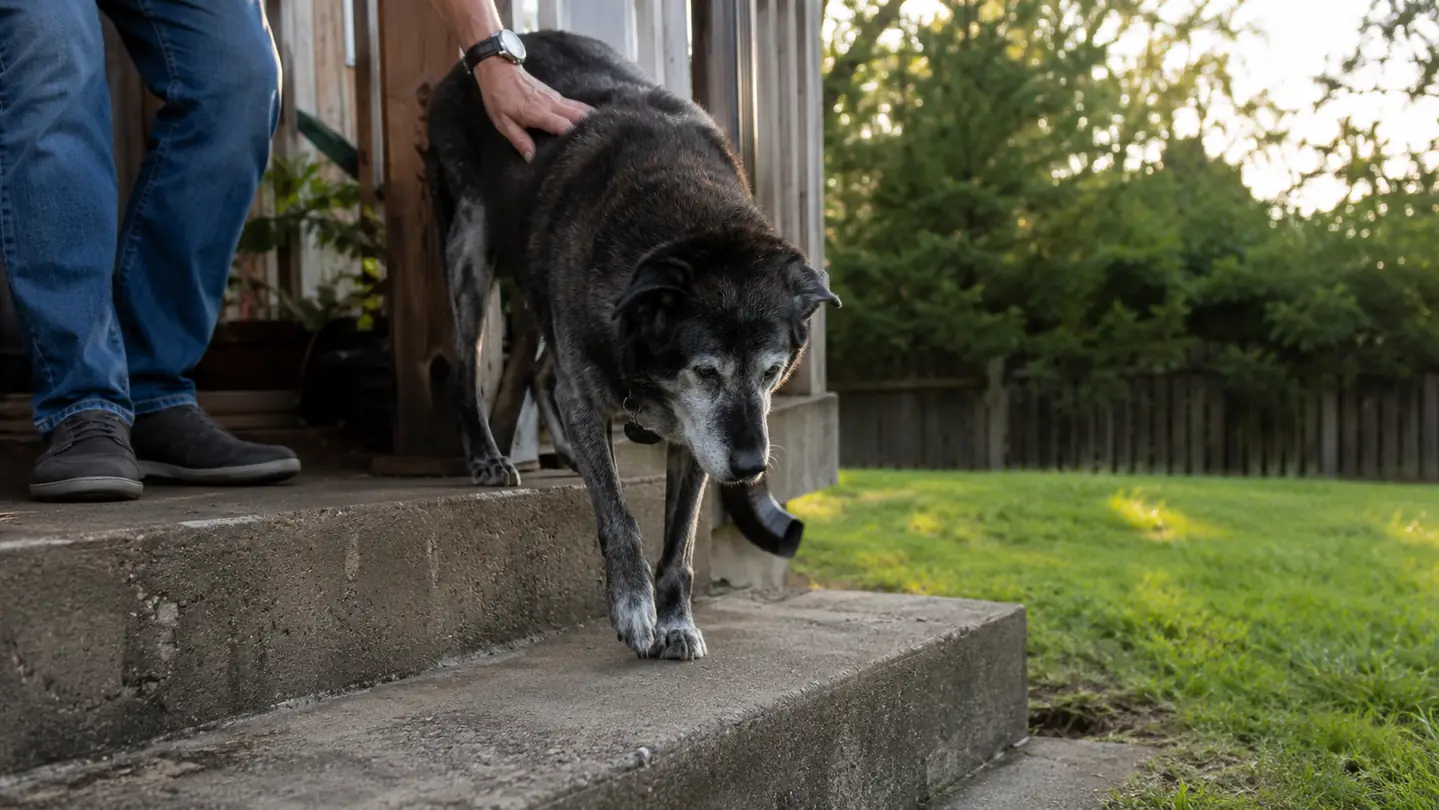
Ranger is eleven, about eighty-two pounds, and he used to beat me to the back door. Now he stands at the top of the two concrete steps off our porch and thinks about it. Then he takes them one at a time, front legs first, back legs doing the careful work. Our vet called it mild hip arthritis when he was nine. Two years later it is not better, and I am not going to tell you a chew fixed it. What I will tell you is that the mornings are easier than they were, and green lipped mussel is part of why.
I am seventy, retired, and I coached baseball for thirty years, so I will explain this the way I used to explain a drill. Here is what to do, here is why it works, here is what to watch for. The short version: get the hips checked, pick a mussel product you will actually keep giving, start at the label amount, fix the floors and the steps, then give it eight weeks before you decide anything. In this house that product turned out to be Zesty Paws Mussel Mobility Bites, a soft chew Ranger takes without a fight. The order matters more than the brand.
The Soft Chew That Got Ranger Off the Floor on the First Try
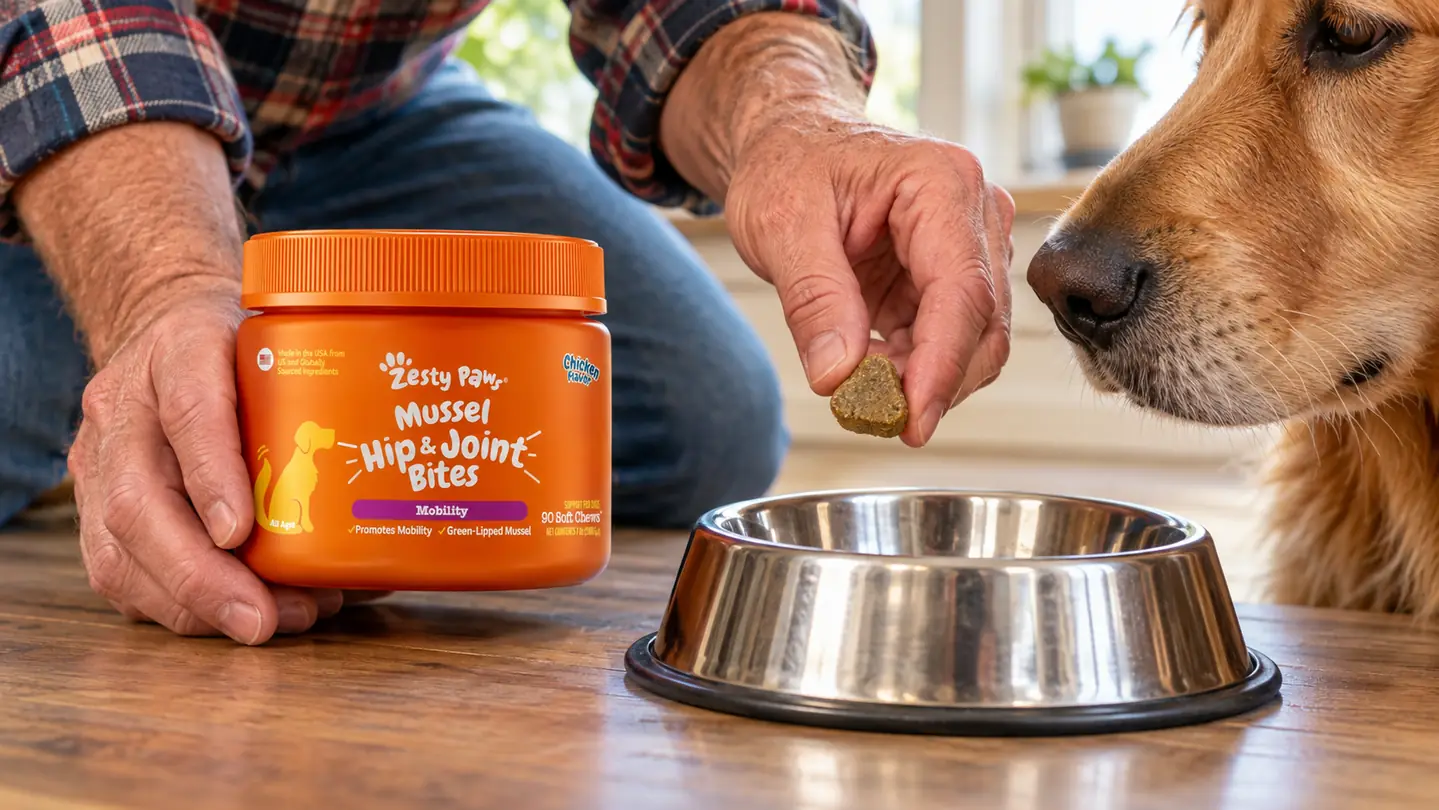
Zesty Paws Mussel Mobility Bites are cold processed New Zealand green lipped mussel in a chicken and mussel soft chew, with natural glucosamine, chondroitin and omega-3 fatty acids. Ninety chews to a bag, 7.9 ounces. Ranger takes his at breakfast, dry, off the kitchen floor.
Amazon Check Today's Price on Amazon →Step 1: Have the Vet Look at the Hips Before You Buy a Single Chew
I bought a tub of joint chews before the vet ever saw Ranger, and it was the right product for the wrong reason. I had decided it was arthritis because he was old and he was slow. Our vet put hands on him, watched him walk away and back, and then took x-rays. Mild hip arthritis. That is a different thing from a torn cruciate or a disc problem in the back, and those need different answers. You cannot supplement your way past a structural injury, and you will waste six months finding out.
The second thing that came out of that visit was weight. Ranger was a few pounds heavier at nine. The vet wanted him at eighty-two and said every extra pound is about four on the back end when he stands up. That was harder than any supplement. We cut the table scraps and stopped leaving food down all day. He is eighty-two now and holds it, and the standing-up got easier before we ever opened a bag of anything.
So step one is not a product. Step one is a diagnosis and a number on a scale. Ask your vet two questions while you are there: is this arthritis or is something else going on, and what should he weigh. Write both answers down. You will want them in eight weeks when you are trying to remember what normal looked like before you started.
Step 2: Pick a Mussel Product You Will Actually Keep Giving
Green lipped mussel is the part that matters here. It comes from New Zealand waters and it carries natural glucosamine, chondroitin and omega-3 fatty acids in a form that comes from a whole shellfish rather than a lab. Processing matters too. Heat can damage the compounds you are paying for, which is why you see the words cold processed on the labels worth reading. Zesty Paws sources theirs from New Zealand and cold processes it, and the listing says so in plain language.
The other half of step two is boring and it is the half people skip. A supplement only helps if it goes into the dog every single day for months. Ranger is a Labrador. He will eat anything, but he will not eat anything twice if it tastes like a vitamin. The Zesty Paws bites are a soft chew with a chicken and mussel flavor, and he takes his at breakfast with no coaxing, which is the entire reason we stayed with them past the first bag. If your dog turns his nose up, you have not found your product yet, no matter what the bag claims.
One practical note before you order. The bag is ninety chews and 7.9 ounces, and an eighty-two pound dog goes through them faster than you expect. I put a reminder on the calendar now so we are never down to the last three. Read the ingredient panel all the way down while you are at it. These list chamomile among the active ingredients, which is worth knowing if your dog is on anything else, because calm is not the same thing as nothing.
Step 3: Start at the Label Amount and Keep a Log for Two Weeks
Give the amount on the back of the bag for your dog's weight and no more. I have watched people double up in the first week because they want to see something happen, and all that gets you is a dog with loose stool and a bag that runs out early. Ranger's weight puts him in the middle of the chart, and I called our vet to confirm before the first chew, because that is the rule in this house and it ought to be the rule in yours.
Then keep a log. Not a feeling. A log. Three lines a day in a spiral notebook on the kitchen counter: how he got up the first time in the morning, how he took the two porch steps, and whether he needed help into the truck. Morning is the honest hour. A dog who has been lying still for eight hours tells you the truth about his hips before the day has warmed him up and before he has any reason to please you.
The first two weeks are when you watch for trouble rather than progress. Shellfish is a common allergen, so if you see itching, a rash, hives, or loose stool, stop the chew and call your vet. That is not a knock on the product. It is how shellfish works for any dog, and it is the reason you start one new thing at a time instead of three at once and then guess which one did what.
Step 4: Fix the Floors and the Steps Before You Touch the Dose
Here is what I got wrong for a year. I kept looking at the bag for answers when the answer was under his feet. Our kitchen and hallway are vinyl plank and slick as a diner floor. Ranger was splaying out on turns and I was calling all of it arthritis. Linda put a runner down from the back door to the den and the difference was visible inside a week. Carpet in the den, a runner in the hall. That is the cheapest thing in this article and it is not close.
The two concrete steps off the porch are the other half. I used to let him rush them, and he would land hard on the front end and be sore the next day. Now I go down first and let him take them at his speed, one paw at a time, hand near the collar but not pulling. It costs me eight extra seconds. He is not in a hurry and neither am I, not anymore.
The truck is the third one. Ranger stopped jumping into the F-150 around nine years old and I took it personally for a while, which was foolish. Now I put the tailgate down and he steps up, and if he hesitates I lift his back end with a hand under the hips, no drama. In the yard the walk stays at twenty minutes around the neighborhood loop, but some days we split it into two tens. Shorter and more often beats one long grind every time.
Step 5: Give It Eight Weeks and Judge It by the Walk, Not the Mood
Nothing you can buy works in four days. I do not care what the reviews say. The reasonable timeline is this: weeks one and two you see nothing, and you are mostly watching for stomach upset. Weeks three and four you might notice he gets off the floor without that little rocking motion he does to get his back legs under him. Weeks six to eight are when the walk tells you something, if there is something to tell.
Judge it by things you can count. How many seconds from lying down to standing. Whether he takes the porch steps in one motion or two. Whether he stops at the far end of the loop and looks back at the house. I have the notebook from two years ago and I can point to the week in March when the first stand of the morning went from three tries to one. That is the kind of change I trust. A good mood on a warm Tuesday is not evidence of anything.
At eight weeks you make a decision. If the log looks better, keep going and keep buying, because this is a daily habit and not a course of treatment you finish. If the log looks the same, stop and go back to the vet rather than stacking three more products into the bowl. And if it got worse, that is a vet visit, not a shopping trip. Do not add anything new without telling your vet what is already going in.
Judge it by the porch steps, not by how you feel about the bag. One motion instead of two is data. A good mood on a Tuesday is not.
What Else Helps
Weight is the lever with the longest handle. Five pounds off an eighty-two pound dog is not a diet, it is a different dog on the stairs. Keep the nails short, because a long nail changes how the foot lands and pushes the whole leg out of line. Give him a warm spot off the cold floor, a bed with some thickness to it, and keep it away from the door draft. And keep the walk, even the short one. Muscle around a bad hip is the only brace that grows on its own, and it stops growing the day you stop asking him to use it.
On combining things, use some sense. Green lipped mussel plays fine alongside a glucosamine chew in most cases, but most is not all, and it does not play fine with everything your vet might prescribe for pain or inflammation. Bring the bag to the appointment. Our vet reads the panel and adjusts, and that is worth more than any review you will read online, mine included. Start one new thing at a time so you know what did what.
Start the Eight-Week Clock This Week
Zesty Paws Mussel Mobility Bites. Cold processed New Zealand green lipped mussel with natural glucosamine, chondroitin and omega-3s, in a chicken and mussel soft chew, ninety to a bag. Give it daily, keep the notebook, and let the porch steps be the judge.
Amazon Check Today's Price on Amazon →