
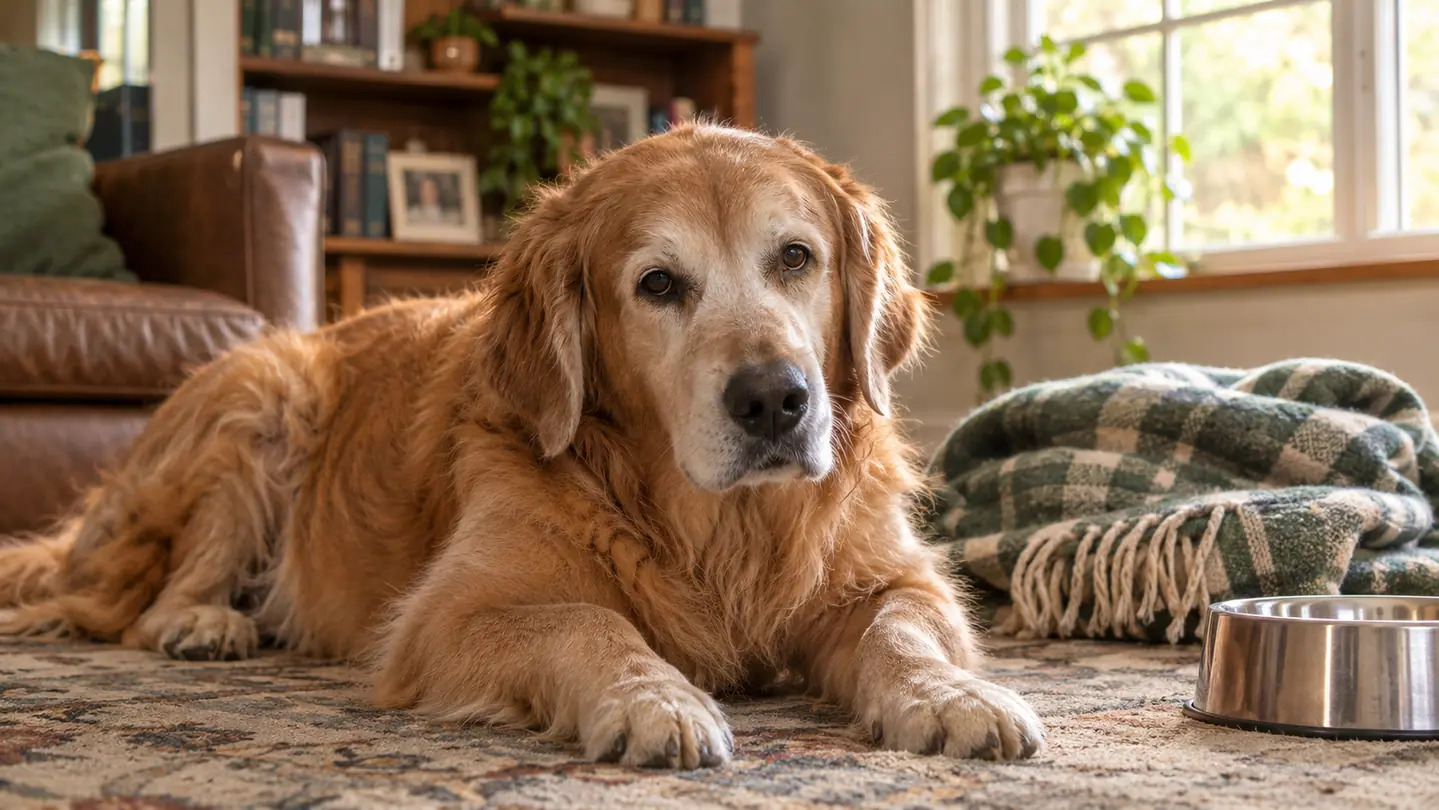
Ranger is eleven now, a black Lab who used to meet me at the truck before I had the door halfway open. These days he takes the two concrete steps off the back porch one at a time, front paws first, like he is reading the ground before he trusts it. Our vet called it mild hip arthritis when he was nine. The chews came after that, and getting him to eat them turned into its own project.
If you are reading this, you likely have a jar on the counter and a dog who has decided it is not food. Maybe he eats the kibble around it. Maybe he holds it in his cheek for a minute and then drops it on the vinyl plank floor in the hallway. I have stepped on that chew in the dark. What follows is the drill I worked out, built around a soft chew from VETIQ, the Hip and Joint chews with glucosamine, MSM and krill, 180 to a jar. And the usual rule in this house: talk to your vet before you start a supplement or change one.
A Soft Chew Is Only Useful If He Swallows It
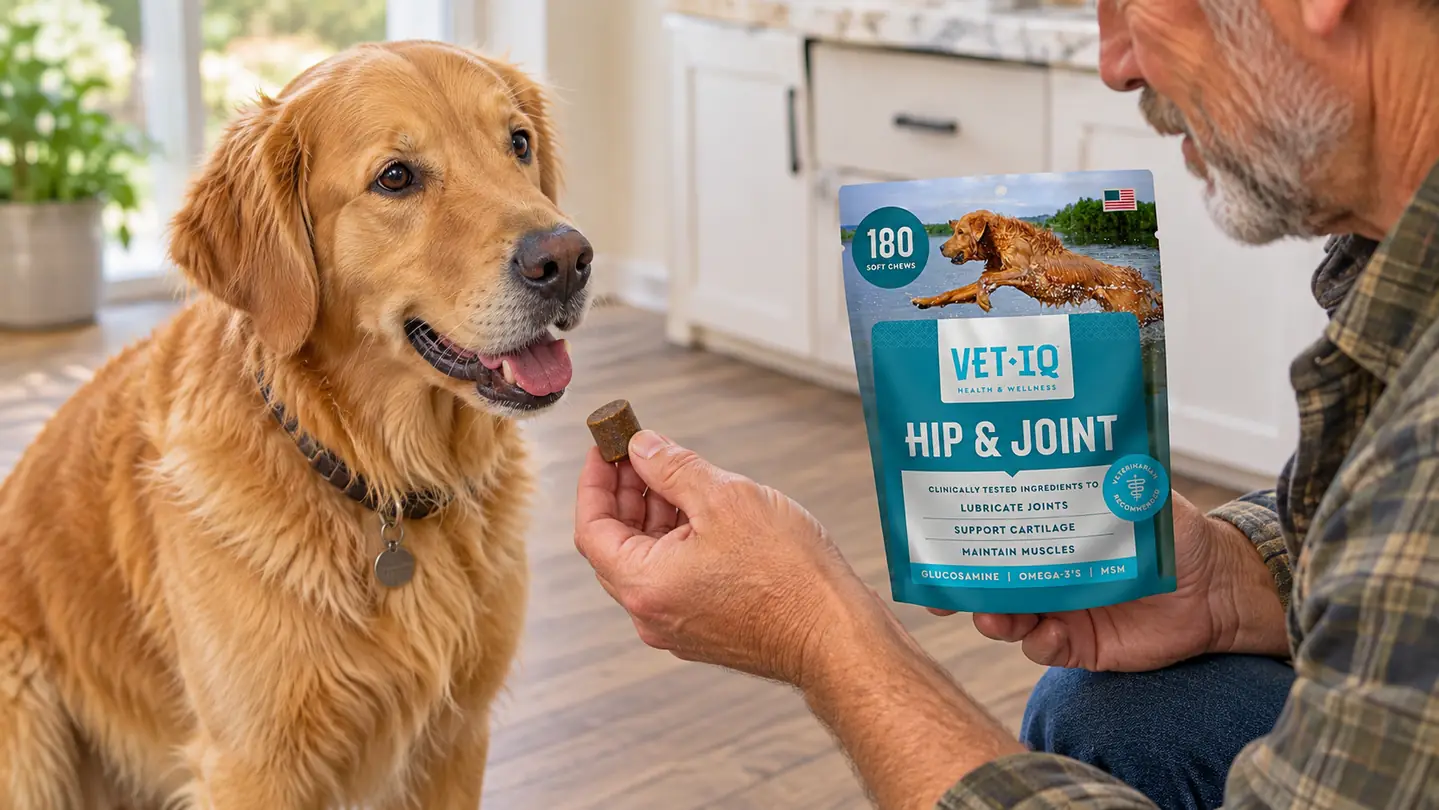
VETIQ Hip and Joint soft chews are chicken flavored, 180 to the jar, and made for the dog who has already turned down a tablet. Hand one over before breakfast, not after.
Amazon Check Today's Price on Amazon →Before You Start: Three Things to Settle First
Before the drill, three things worth settling. First, get a diagnosis, not a guess. Ranger's hip arthritis came from an exam and an x-ray, not from me watching him on the porch steps and deciding I knew what was wrong. A dog who is slow to rise can be slow for a lot of reasons, and some of them have nothing to do with joints.
Second, change one thing at a time. If you start a new chew, a new food and a longer walking route in the same week, you will have no idea which one helped and no idea which one caused the upset stomach. I learned that lesson the hard way, and I have not repeated it since.
Third, ask about interactions. If your dog is on any prescription, your vet needs to know what you are adding. Bring the jar to the appointment and read the label out loud if you have to. A two minute conversation beats a bad week.
Step 1: Get the Mouth Checked Before You Blame the Flavor
A senior dog who quits a chew is not always a picky dog. Sometimes he is a dog with a sore tooth, a bad gum line, or a cracked molar he has been working around for months. Ranger had a slab of tartar on his left side that I never saw until the vet lifted his lip. He had been chewing on the right for who knows how long. If your dog takes the chew, rolls it around, and drops it, look in the mouth before you go shopping for a different brand.
Ask your vet to check the teeth and gums at the next visit, or sooner if the dropping started suddenly. A soft chew is easier on an old mouth than a hard tablet, but easier is not the same as painless. A dog with an inflamed gum will refuse a soft chew too, and no flavor fixes that. Rule out the mouth first. Then you can have an honest conversation about pickiness.
While you are at it, watch how he eats his regular food. If he is swallowing kibble whole, or tilting his head to one side to chew, that is information worth writing down. I keep a small notebook in the kitchen drawer for exactly this, and I have handed it to our vet more than once. A dog who drops a chew and a dog who drops a chew because his back teeth hurt can look identical from across the kitchen.
Step 2: Match the Texture to the Dog
Joint supplements mostly show up three ways: hard tablets, powders you dump on the food, and soft chews. Plenty of older dogs quit tablets around the same age their hearing goes. The tablet is hard, it is chalky, and it takes real work to break down. Ranger turned his nose up at tablets for two weeks and then started leaving them in the bowl like a written complaint.
Soft chews he will at least pick up. This is where the VETIQ chews helped in our house. They are a soft chew with a chicken flavor, which matters more than any wording on the front of the jar, because a supplement a dog will not eat is a supplement you have wasted. The jar holds 180. The label lists glucosamine, fish oil and krill, along with MSM, and that combination was one our vet was willing to try for a dog with mild hip arthritis and no other issues.
Powders are fine for some dogs and I have nothing against them. But a powder on kibble is easy for a dog to sort out. Ranger is a Lab, which means he sorts by smell first and enthusiasm second. If your dog inhales everything in the bowl, a powder is simple and you can skip ahead to the next step. If your dog is not that dog, texture is the whole ballgame.
Step 3: Hand It Over Before the Meal, Not After
A hungry dog is a cooperative dog. I give Ranger his chew in the morning, ten or fifteen minutes before I set the bowl down. He is awake, he is moving, and he has not yet settled into the day's main occupation, which is waiting. Offering a chew after a full meal is asking a satisfied animal to eat something extra out of politeness. Most of them will not.
Hold it flat in your palm and let him take it from you. Do not toss it on the floor, and do not put it in the bowl, at least not at first. A chew that appears in the bowl gets inspected and rejected. A chew that comes from your hand is a thing you gave him, and a dog who likes you will usually give it a try.
If he takes it and drops it, pick it up and offer it one more time. Then let it go for the day. Do not turn breakfast into a standoff. You are not trying to win an argument, you are trying to build a habit, and habits are built on ordinary mornings, not on the ones where everybody ends up frustrated.
Step 4: Use a Bridge, Then Fade It
For the first week I put a smear of wet dog food on the chew. Not much. Just enough that his nose got the message before his mouth did. Then I set the chew on top of a few pieces of kibble so it smelled like the meal. It took about four days before he stopped sniffing it like it might be a trick. By the second week he was taking it plain. A bridge is a tool, not a permanent arrangement, and the whole point is to get off it.
Things that work as a bridge: a little wet food, a shred of boiled chicken, a spoon of plain yogurt if your vet is fine with dairy. Things that do not: peanut butter with xylitol in it, which is toxic to dogs, and any table scrap your dog should not be eating. Read the label on anything you smear on a chew. A picky dog is a nuisance. A sick dog is a much bigger problem.
If the bridge has not worked after ten days, stop and call your vet. Some dogs will not take a chew no matter what you do, and there are other forms of the same supplement. Loyalty to a product is not the goal here. A dog getting what he needs is the goal.
He still takes the porch steps one at a time. He just does not stop at the top and think it over anymore.
Step 5: Give It Eight Weeks and Keep a Written Log
This is the step I almost skipped, and it is the one I would keep if I could only keep one. I took a spiral notebook, wrote the date at the top of a page, and gave Ranger a score out of ten each morning for how he got up off the carpet in the den. Then a second score for the walk. Two numbers a day, plus anything odd. That is the whole system, and it takes about fifteen seconds.
Here is why the log matters. You will not remember how he was in March. Nobody does. You will remember that he seemed better, or you will remember the bad week, and memory rounds things off in whichever direction your mood is pointed. Two numbers a day takes the mood out of it. After eight weeks you have a page you can hand to the vet instead of a feeling.
Eight weeks is a fair window for a joint supplement, and I would not expect much before that. Joints are slow. Ranger did not turn into a puppy. What changed was smaller than that. He stopped stopping at the top of the porch steps to think it over. He started getting up on the first try instead of the second. If you are waiting for a dramatic moment, you will miss the real one.
What Else Helps
A chew is one part of it. The rest is the house and the daily routine, and that part is dull and unglamorous and it works. Ranger was carrying about 82 pounds on hips that would have preferred 76. Our vet said the single best thing I could do was get some of that off, slowly, with measured meals and fewer snacks between them. I did not love hearing it. It helped more than anything in the jar.
The floor matters more than people think. We have vinyl plank in the kitchen and hallway and carpet in the den. Ranger slips on the plank when he is in a hurry, so we put down two runners and he uses them without being taught. Same idea with the two concrete steps off the porch: a rubber mat on each one gives him something to grip. A dog who is afraid of slipping moves less, and a dog who moves less gets stiffer.
One more thing, and this is the one I wish I had done sooner: raise the bowls. Ranger was folding his neck and front legs all the way down to a bowl on the floor, and on a stiff morning that is a lot of folding before he has had his coffee. A shallow stand that lifts the bowl a few inches made breakfast easier without changing anything about what he eats. It is not a cure for anything. It is one less obstacle in a day that already has a few too many.
Keep the walk. Twenty minutes around the neighborhood loop, slower than it used to be, beats nothing at all. Short and often is better than one long outing. And keep your vet in the loop, because hip arthritis in an eleven year old Lab is not something you manage alone in your own head with a notebook and a jar of chews.
Eight Weeks, One Notebook, 180 Chews
You do not have to take my word for any of this. Give it two months, write down two numbers a day, and let the page tell you what your dog cannot. VETIQ Hip and Joint soft chews come 180 to the jar in a chicken flavor, which is a fair stretch of mornings for a dog who has already turned down a tablet.
Amazon Check Today's Price on Amazon →