
The first time I put the PICK FOR LIFE lift harness on Ranger, he sat down. Not because it hurt him. Because he is eleven, he weighs about eighty-two pounds, and he has mild hip arthritis our vet found when he was nine. He has learned that sitting is a strategy. I had the padded handles in my hands and no plan for a dog who had decided the hallway was a good place to stop. That is the honest beginning of this review.
What nobody tells you about a lift harness is that the hard part is not the harness. The hard part is the dog, the sizing, and your own back. The PICK FOR LIFE harness is a nylon sling with padded handles and an adjustable strap, and it does the job it says it does: it gives you a way to support the back half of a large dog. But it is a handling tool, not a treatment, and it will not turn an old dog into a young one. If you want the short version, that is it. The rest of this is what I learned in a hallway, on two concrete steps, and beside a Ford F-150.
The Quick Verdict
A sturdy rear-end assist for a large dog, with padded handles that spare your hands and a seven-day warranty that tells you to measure carefully. Use it for the steps and the truck, not for a cure.
Amazon Check Today's Price →If Your Dog Needs a Hand Up the Steps, This Is the Tool I Keep by the Door
The PICK FOR LIFE lift harness supports the back end with padded handles and an adjustable strap. It will not replace your vet's plan, but it makes the porch steps and the truck bed less of a gamble. Check the size range before you order.
Amazon See the PICK FOR LIFE Lift Harness on Amazon →How I've Used It on Ranger
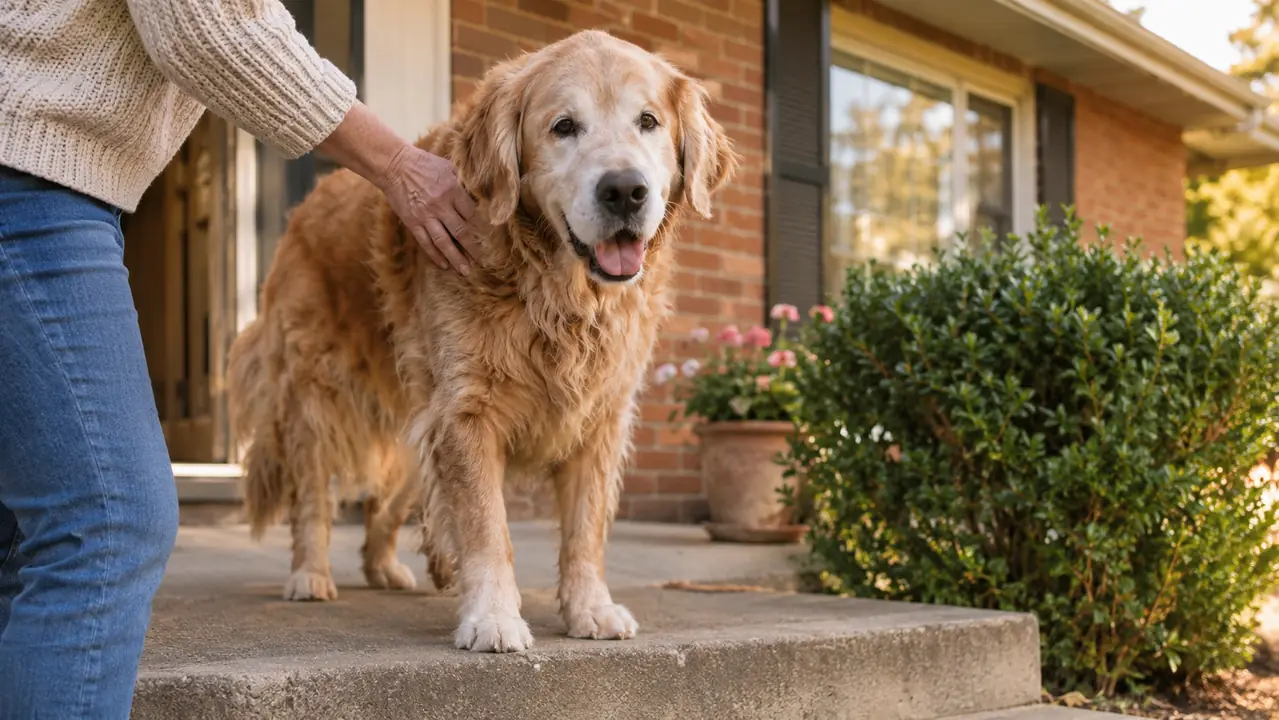
Ranger is a black Lab, eleven years old, about eighty-two pounds. He was diagnosed with mild hip arthritis at nine. He still does the twenty-minute loop around the neighborhood, but he is slower, and he thinks about the two concrete steps down from the back porch before he takes them. The truck is the other trouble spot. He used to jump into the F-150 without a thought. Now he stands there and looks at me.
I started using the PICK FOR LIFE harness in the kitchen, where the floor is vinyl plank and he has traction. The strap is adjustable, and the listing says it runs from 52 to 76, so I measured him twice before I ordered the X-Large. The first fit was close but not right. I had to shorten the strap, and that took both hands and a dog who was willing to stand still. Ranger was willing for about forty seconds. I got it done in three sessions with a few treats.
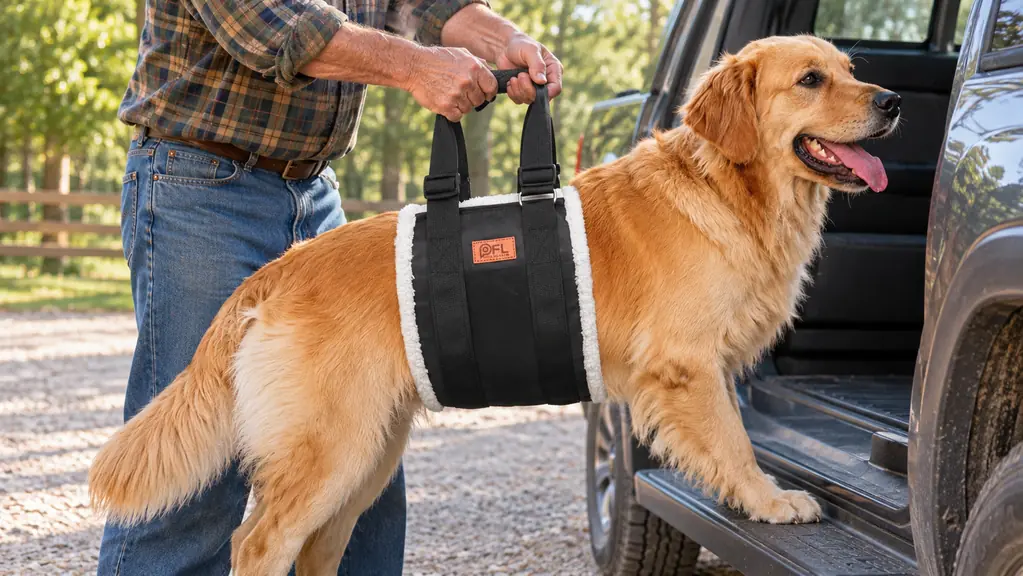
The way it works is simple. You put the sling under the back half, adjust the strap, and use the padded handles to take some of the weight when the dog needs help. I do not carry him. I take maybe a fifth of his weight, just enough that his back feet do not have to do all the work. On the steps, I stand above him and hold the handles while he takes one step at a time. In the truck, I hold the handles while he puts his front feet on the floorboard, then I help the back half follow. It is not graceful. It is safer.
What Nobody Tells You About a Lift Harness
A lot of people buy a lift harness hoping it will fix the problem. It will not. Ranger's arthritis did not go away because I bought a sling. His back legs are still stiff in the morning. He still takes a moment to get up after a nap on the den carpet. The harness gives me a way to help him move without wrestling him, and that is all it gives me. The medical part is between you and your vet.
The second thing nobody tells you is that you have to learn to use it. The first week, I was holding the handles too high and pulling him off balance. He would stop and look back at me like I had lost my mind. I lowered my hands, kept the strap snug but not tight, and let him set the pace. That made a difference. The harness is not automatic. It is a skill, and you are the one who has to learn it.
The third thing is the dog's dignity. Ranger is a proud dog. He does not like being hovered over. I had to get him used to the sling in the house, with treats, before I used it outside where the neighbors could see. Now he stands still when I bring it out. But that took a couple of weeks. If your dog fights it, do not force it. Go slower. Talk to your vet or a trainer if you need to.
Sizing, Fit, and the Seven-Day Warranty
The PICK FOR LIFE harness comes in sizes, and the X-Large is built for large to extra large dogs. The listing gives an adjustable strap range of 52 to 76. That range is the number that matters. Measure your dog around the back half, not around the neck, and measure twice. If you are between sizes, get help from the seller or size up. A sling that is too short will ride up. A sling that is too long will hang loose and give you no leverage.
Ranger at eighty-two pounds fits the X-Large with room to adjust. I would not guess on a dog much bigger than him without measuring. The material is nylon, the closure is listed as a drawstring, and the whole thing weighs 14.08 ounces, so it is easy to keep in the truck or hang by the door. The package dimensions are 9.92 by 4.45 by 4.25 inches, which tells you it folds down small. That matters if you are carrying it in a bag or keeping it in a vehicle.
The warranty is seven days. I am not going to dress that up. Seven days is short. It tells you to check the fit and the stitching as soon as it arrives, and to keep the packaging until you are sure. I inspected the seams and the handles on day one. Ours have held up, but I would rather tell you the warranty is short than pretend it is generous.
If you get the wrong size, do not wait until the seventh day to speak up. Unbox it, put it on the dog in the house, and check the strap range against the measurement you wrote down. The harness should sit under the back half without riding up into the belly or hanging down past the hocks. If it does either one, stop and get the fit right. A loose sling is worse than no sling because it gives you a false sense of security.
The Padded Handles, the Steps, and the Truck
The handles are the best part. They are padded, and they are wide enough that they do not cut into your fingers when the dog leans. I have used a towel under Ranger's belly before, and a towel works until it does not. It slips, it bunches, and your hands pay for it. The PICK FOR LIFE handles give you a real grip. On the twenty-minute loop, I hold them only when he needs it, mostly at the start while he gets moving and at the end when he is tired.
At seventy years old, I can tell you that handle height matters. If you are tall, you will be bending. If you are short, you may be lifting your hands too high. I am six feet, and I still feel it in my lower back if I hold the handles for a long stretch. This is not a hands-free tool. It is a hand tool. You are part of the equipment.
Our back porch has two concrete steps down to a fenced yard. Two steps do not sound like much. But for an eleven-year-old Lab with hip arthritis, two steps are a decision every single time. Before the harness, I would stand below him and hold his collar, which was a good way for both of us to fall. Now I stand beside him, hold the rear handles, and let him take the steps one at a time. It is slower. It is also steadier.
The truck was the other test. Ranger used to jump into the F-150 like it was nothing. Now he puts his front feet on the floorboard and waits. I hold the handles and take the weight off his back end while he brings his back legs up. I do not lift him clean off the ground. I just make the jump unnecessary. That is the whole point of a lift harness. It turns a jump into a step. On bad mornings, I use it in the hallway, where the vinyl plank gives him traction. On good days, I leave it by the door and do not need it. That is the honest rhythm. Some days he is stiffer than others. The harness is there for the stiff days. It is not something I use every minute of every walk.
Where It Falls Short
It only helps the back half. If your dog's front legs are the problem, this is the wrong tool. If your dog has neck or spine issues, ask your vet before you use any sling. I am not a vet, and I am not going to pretend a harness is a diagnosis. Ranger's front end is fine. That is why this works for us. If his front legs were the weak part, I would be looking at something else.
It is not a walking harness. I still use Ranger's regular collar and leash for control. The lift harness is for support, not for steering. If your dog pulls, this will not fix that. It may make it worse if you are trying to hold both. I keep the leash in one hand and the rear handles in the other, and I only use the handles when we are on the steps or the truck. On the flat sidewalk, I let him walk.
It takes two hands to adjust, and it takes a dog who will stand still. If your dog is fearful or reactive, get help. If you have back problems of your own, think about who will be holding the handles. At seventy, I can do it, but I feel it the next morning if we do too much. The padded handles help. They do not make the job weightless.
If I could change two things, I would change the warranty and the sizing chart. Seven days is not enough time to know if a harness will hold up to a South Carolina summer and a dog who leans. The strap range is there, but you have to dig for it. A simple diagram on the listing would save a lot of returns. I would not change the handles. They are the reason I kept using it. The padding is real, and the grip is wide enough for a man with arthritis in his thumbs. That is not a small thing at my age.
What I Liked
- Padded handles give a solid grip without cutting into your fingers.
- Adjustable strap range of 52 to 76 covers a large dog and leaves room to fine-tune.
- Nylon material and machine wash care make it easy to keep clean.
- At 14.08 ounces, it is light enough to keep in the truck or by the door.
- The rear-end support makes porch steps and the truck bed less of a gamble.
Where It Falls Short
- Seven-day warranty is short for a product that takes time to test.
- Only supports the back half, so it is the wrong tool for front-leg weakness.
- Adjusting the strap takes two hands and a cooperative dog.
- Not a walking harness and does not replace a leash for control.
- Sizing is unforgiving, so measure carefully before you order.
The harness did not give Ranger a new hip. It gave me a way to help him up the steps without both of us ending up on the ground.
Who This Is For
This is for the owner of a large dog who is slowing down in the back end. The dog who thinks about the porch steps. The dog who used to jump into the truck and now waits. The dog who can still walk but needs a hand. If that is your house, the PICK FOR LIFE lift harness is worth a look. It is also for the owner who is willing to learn. You have to measure, adjust, and practice. You have to be patient with the dog and with yourself.
If Ranger's stiff mornings are familiar, you already know the drill. You watch the clock. You watch the steps. You watch the weather. A lift harness does not answer all of that. It answers the part where you need to help him move without hurting him or yourself. That is a narrow job, and this tool does it well.
Who Should Skip It
Skip it if your dog's front legs are the problem, or if your dog is small enough to lift with your arms. Skip it if your dog panics when you touch the back half, or if you cannot get a helper to hold the dog while you adjust the strap the first few times. Skip it if you are looking for a cure for arthritis. It is not a cure. It is a sling with handles.
Skip it if you want a hands-free walking aid. This is a hand tool. You will be holding the handles, and your back will be part of the job. If that is not realistic for you, talk to your vet about other options, including a cart or a professional mobility harness. There is no shame in that. The right tool is the one you can use safely.
A Hand Up for the Back Half, Not a Cure for the Whole Dog
If Ranger's stiff mornings are familiar, the PICK FOR LIFE lift harness is the tool I keep by the back door. Measure your dog, check the strap range, and give yourself a week to learn it. Then talk to your vet about the rest of the plan.
Amazon See the PICK FOR LIFE Lift Harness on Amazon →